
Since 2013
History
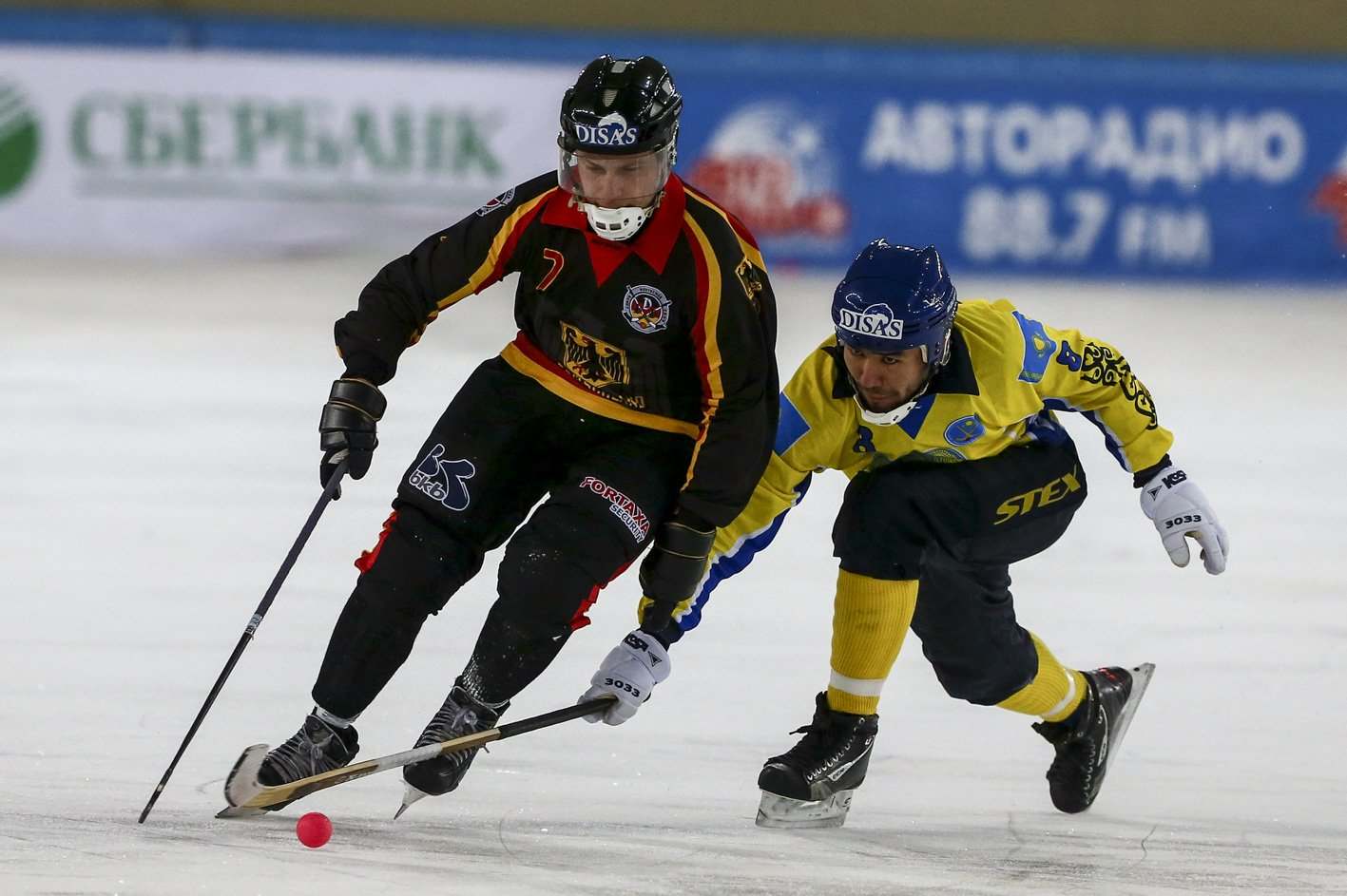
Bandy is one of the oldest team sports on ice. Bandy was already played in Germany in the early 20th century. The national federation, the DBB, has existed since 2013 and sends two national teams to World Championships.
In brief
Bandy developed from older games played on ice with a stick and ball. In England, Charles Goodman Tebbutt recorded general playing rules in 1882. The National Bandy Association was founded there in 1891.
In 1955, Finland, Norway, Sweden and the Soviet Union founded the world governing body, today’s Federation of International Bandy (FIB). Men’s World Championships have been held since 1957, women’s since 2004.
Bandy in Germany before 2013
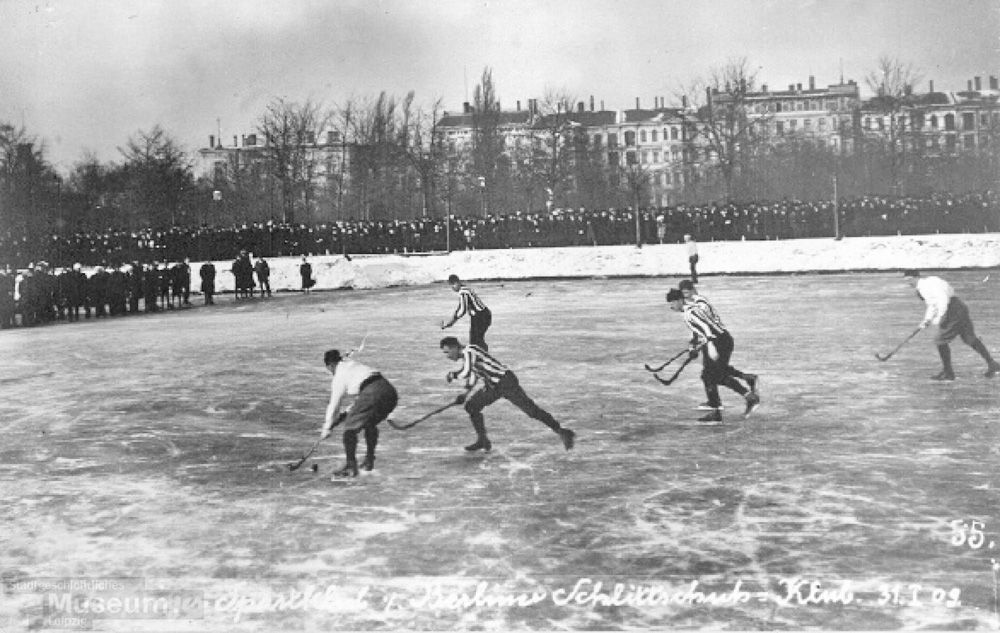
Bandy reached Germany at the end of the 19th century. The first known game was played in Berlin on 4 February 1897: Akademischer Sport-Club Berlin beat a team of students 11–4. In 1899, Bury Fen Bandy Club from England, the club of Charles Goodman Tebbutt, played in Berlin. The FIB also lists a “German Prince Wilhelm” among famous bandy players.[2][1]
The FIB’s historical archive shows a 1909 game between LSC from Leipzig and Berliner Schlittschuh-Klub. Leipziger SC was regarded as Germany’s strongest bandy team and kept playing with the ball into the 1920s.[1][2]
In 1910, Germany was one of the founders of the Northern Bandy Union, together with Sweden, Norway, Denmark and Russia. In the same year the German skating federation adopted separate rules for “ice hockey with the ball” (bandy) and “ice hockey with the puck”.[1][2]
After that, Canadian ice hockey took over. When the Olympic committee chose ice hockey instead of bandy for the 1920 Games, bandy declined in Central Europe. Leipziger SC joined the German ice hockey championship in 1926.[2][3]
A 1913 European Bandy Championship in Davos is often mentioned. The FIB history names England as the winner, but there is no contemporary evidence of the tournament: no results, line-ups or photos. The first mention dates from 1975 and gives no source. We therefore do not present this championship as an established fact.[1][3]
The game never disappeared completely. A group at Neusser Schlittschuh-Klub plays rink bandy on the ice hockey surface. According to a 2021 newspaper report, it was formed almost 50 years earlier, after the ice rink was built, and had around 40 players. Finally, in 2013, the German Bandy Federation was founded.[4]
Sources for this section
- FIB: History (Northern Bandy Union 1910, Leipzig photo 1909, 1913 European Championship)
- International Hockey Wiki: History of hockey in Germany (1897–1945)
- International Hockey Wiki: 1913 European Bandy Championship
- Neuss-Grevenbroicher Zeitung, 25 Jan 2021: “Bandy: Wenn Fußball auf Feldhockey trifft” (PDF, NSK Neuss, German)
We are collecting further sources on German bandy before 2013. Do you have historical photos, newspaper articles or memories? We would love to hear from you.
DBB timeline since 2013
- 2013
DBB founded
The German Bandy Federation is founded. In July, the FIB Executive Committee approves its membership, subject to confirmation by the 2014 Congress.
Source to be added
- 2014
Men’s World Championship debut
First World Championship for the men’s national team: Division B in Irkutsk (Russia).
Source to be added
- 2015
Second World Championship
The men’s national team plays in Division B again.
- 2016
Division B winners
In Ulyanovsk, Germany wins Division B and is promoted to Division A.
Source to be added
- 2017–2019
Three years in Division A
The men’s national team plays three consecutive World Championships in Division A.
- 2023
Back at the World Championship
The men’s national team returns to the World Championship in Division B and wins silver.
Source to be added
- 2025
Women’s World Championship debut
The women’s national team plays its first World Championship in Lidköping (Sweden) and finishes 6th. The men win Division B silver in Uppsala.
Source to be added
- 2026
Both teams at the World Championship
The men’s and women’s teams both take part in the World Championship; the men win Division B silver again.
National team medals
So far, all medals of the national teams were won in Division B, the second tier of the World Championship.
- Men: 4 medals – 1× Gold, 3× Silver.
- Women: no medal yet. Best result so far: 6th place at the 2025 World Championship.
| Year | Team | Medal | Group | Decided by | Source |
|---|---|---|---|---|---|
| 2016 | Men | Gold | Division B, Dimitrovgrad / Ulyanovsk | 1st place in the final round | 2016 FIB World Championship Men A and B — Round Robin and Play-offs (official results bulletin) |
| 2023 | Men | Silver | Division B, Åby / Växjö | Final: Germany – Hungary 1:2 | FIB-Ergebnisbulletin (DBB-Archiv) |
| 2025 | Men | Silver | Division B, Uppsala | Final: Netherlands – Germany 7:1 | Offizieller Spielbericht (DBB-Archiv) |
| 2026 | Men | Silver | Division B, Uppsala | Final: Great Britain – Germany 12:2 | FIB 2026 WCS Men B (tournament page) |
Clubs
Men's national team
Since its debut in 2014, the men’s national team has played at the World Championships from 2014 to 2019 and in 2023, 2025 and 2026. Highlights so far: Division B gold in 2016, three years in Division A (2017–2019) and Division B silver in 2023, 2025 and 2026.
Women's national team
The women’s national team made its World Championship debut in Lidköping in 2025 and finished 6th. In 2026 the team took part again.
Records
Two age records in World Championship history belong to German players – the oldest and the youngest goalscorer. And in its very first World Championship game, the women’s national team went through a penalty shootout of 34 attempts.
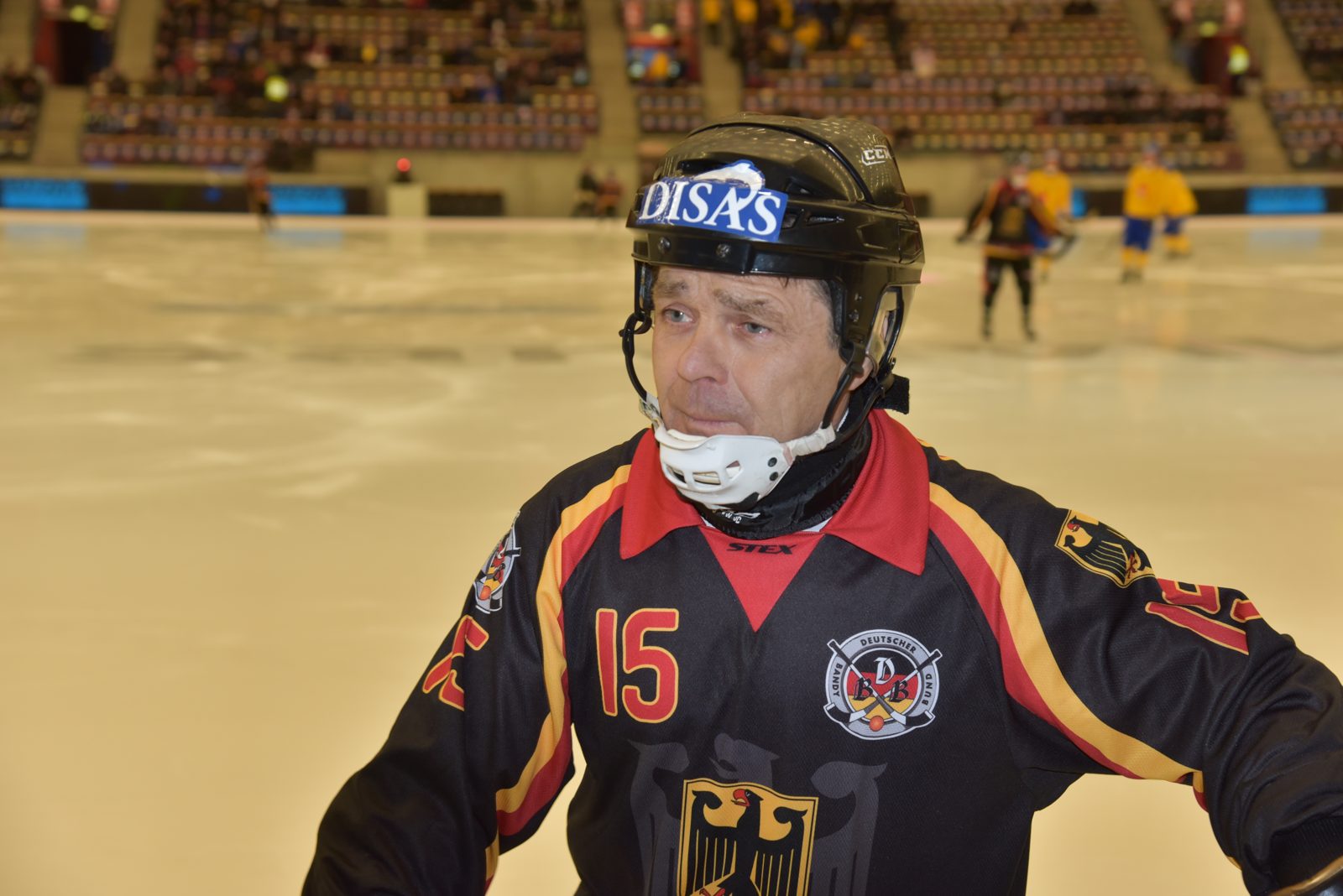
60 years
Oldest goalscorer in World Championship history
Sergej Bitkov scored at the 2017 World Championship in Sweden in the 12–7 win over Belarus in the 7th-place game – at the age of 60. The former Soviet champion (1977 with Dinamo Alma-Ata) has played for Germany since 2014.
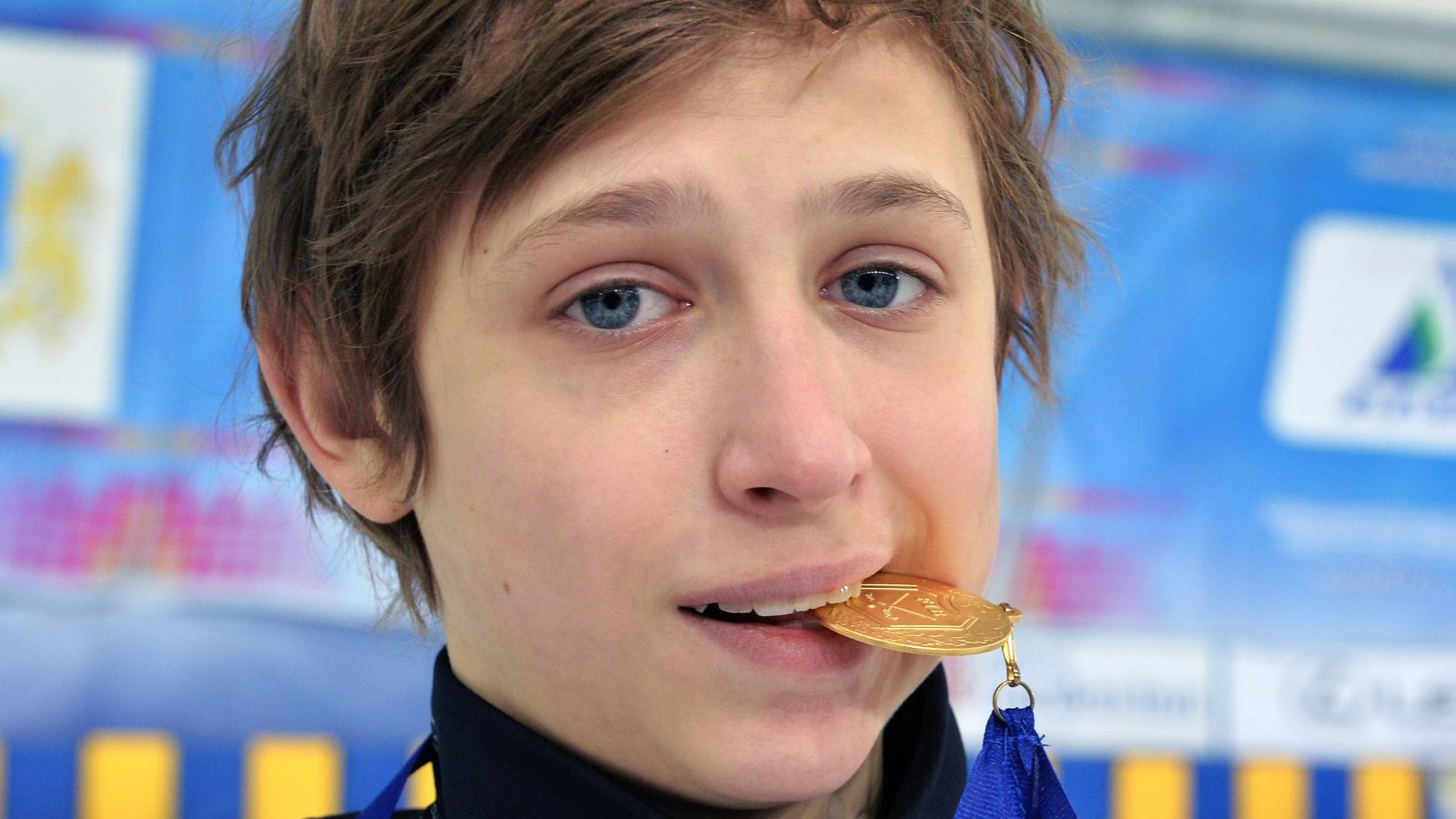
15 years
Youngest goalscorer until 2019
Ewald Paul scored against Estonia at the 2016 World Championship in Ulyanovsk aged 15 and held the record until Valentin Wang-Norderud broke it in 2019.*
68 years
Oldest World Championship player
At the 2025 World Championship in Uppsala, Sergej Bitkov played at the age of 68 and set up the goal for 11–0 in the 13–0 win over Switzerland.
14 years
Youngest goalscorer in World Championship history
Valentin Wang-Norderud scored at the 2019 World Championship in Trollhättan against the Netherlands (7th-place game) aged 14 years and 2 months.
34 penalty strokes
Longest penalty shootout
In the women’s national team’s first World Championship game (2–2 against Switzerland, Lidköping 2025), the shootout went to 17 rounds and 34 strokes before Germany won it 3–2. According to the DBB, the longest shootout in World Championship history.
Sources & gaps
Sources: FIB results and tournament archive (worldbandy.com) and the DBB archive. Some tournaments from the early years are only partly documented there.