
Bandy
What is bandy?
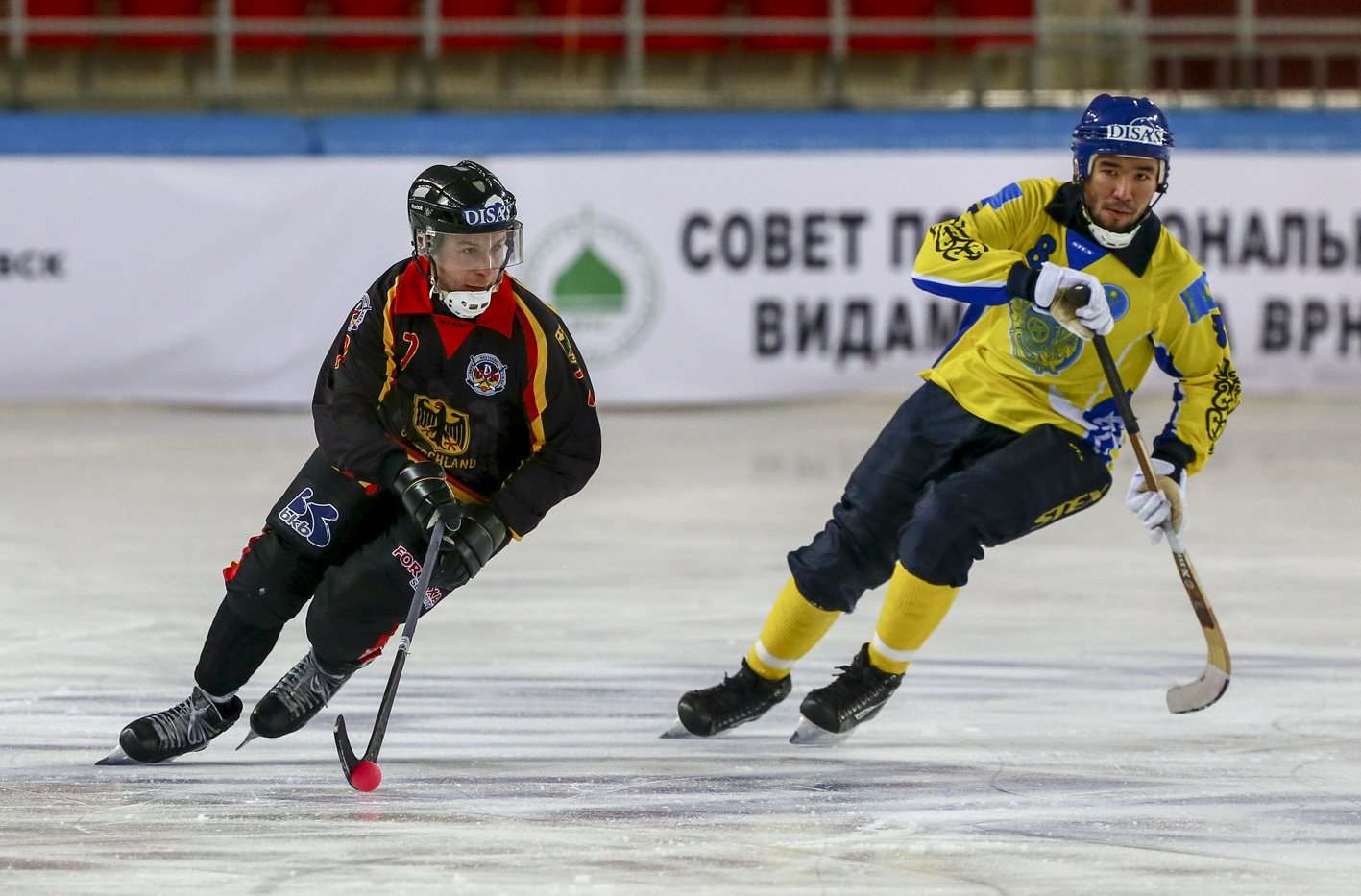
Bandy is a team sport on ice – played with a ball instead of a puck, on a surface the size of a football pitch. It is fast, technical and gives players plenty of space to skate. If you can skate, you can learn bandy.
The rules in five points
Many rules will feel familiar from football – just on skates. The essentials:
- Two teams of eleven players each (ten outfield players and a goalkeeper), playing time 2 × 45 minutes.
- The game is played with a small, hard ball and a curved stick. The goalkeeper has no stick and stops the ball with their hands.
- There is an offside rule similar to football – which makes for long passes and fast counter-attacks.
- Body checking is prohibited. Playing or stopping the ball with the stick above shoulder height is not allowed.
- As in football, there are corner strokes and free strokes. Fouls can lead to time penalties of 5 or 10 minutes.
Bandy compared with ice hockey
Bandy is often called the older sibling of ice hockey. The differences at a glance:
- Playing surface: bandy about 100–110 × 60–65 m (football pitch size), ice hockey about 60 × 30 m.
- Object of play: bandy uses a ball, ice hockey a puck.
- Players on the ice: bandy 11 per team, ice hockey 6 per team.
- Playing time: bandy 2 × 45 minutes, ice hockey 3 × 20 minutes.
- Physical contact: very limited in bandy; in ice hockey, body checking is part of the game.
- Boards: in bandy only a low barrier along the sidelines, no boards all the way round.
Short Bandy
There are no full-size bandy rinks in Germany yet. Short bandy therefore brings the game into ordinary ice arenas: same ball, same sticks, but on an ice hockey rink and with smaller teams. For clubs and newcomers, it is the easiest way into bandy.
History
The German Bandy Federation was founded in 2013. As early as 2014, the men’s national team played its first World Championship, and in 2016 it won Division B. In 2025 the women’s national team played its first World Championship.